
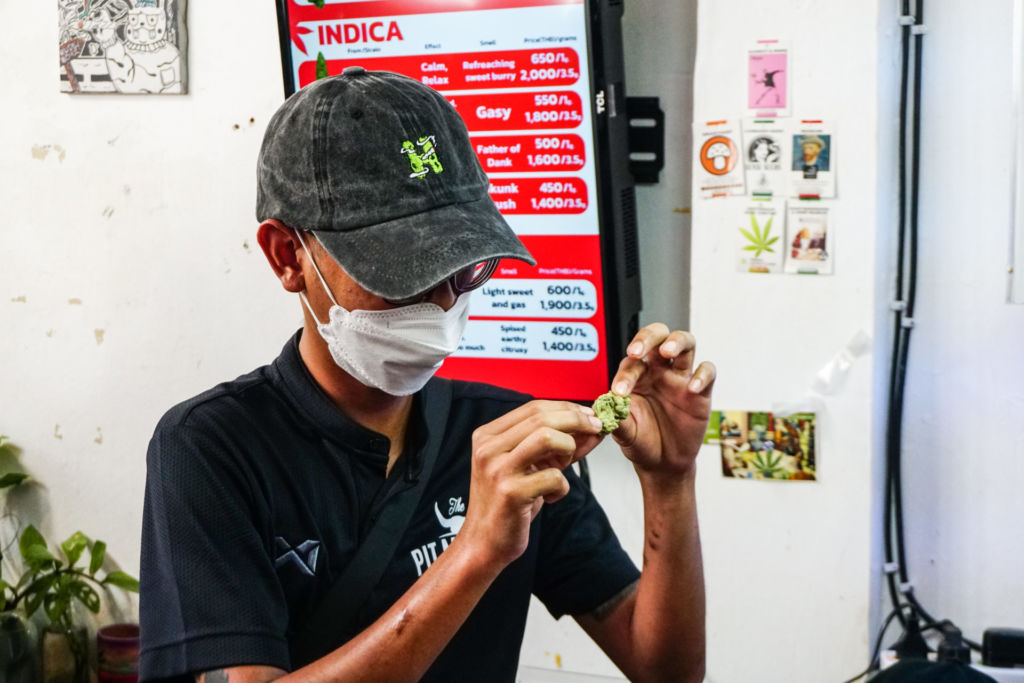
On Thursday, when Rittipong ā€œBeerā€ Dachkul became Highland Cafeā€™s first customer to buy potent weed, a reporter covering the moment saw things very differently.
After observing Rittpongā€™s purchase, Nicolas Kumanoff intoned gravely in a Deutsche Welle report, ā€œā€ That would be news to not only Rittipong, who walked out with a potent indica strain , but to the man who sold it to him over the counter.
ā€œAbsolutely not, hahaha,ā€ Highland cofounder Arun Avery said. ā€œMost were high-THC strains grown here by the locals. The potency checked out well, so it must be because people have been misinformed and just assumed. There’s a lot of misinformation out there, and it needs to be cleared up.ā€
With that falsehood, Kumanoff joined the ranks of reporters who have been consistently wrong about Thailandā€™s giant leap to legalization.
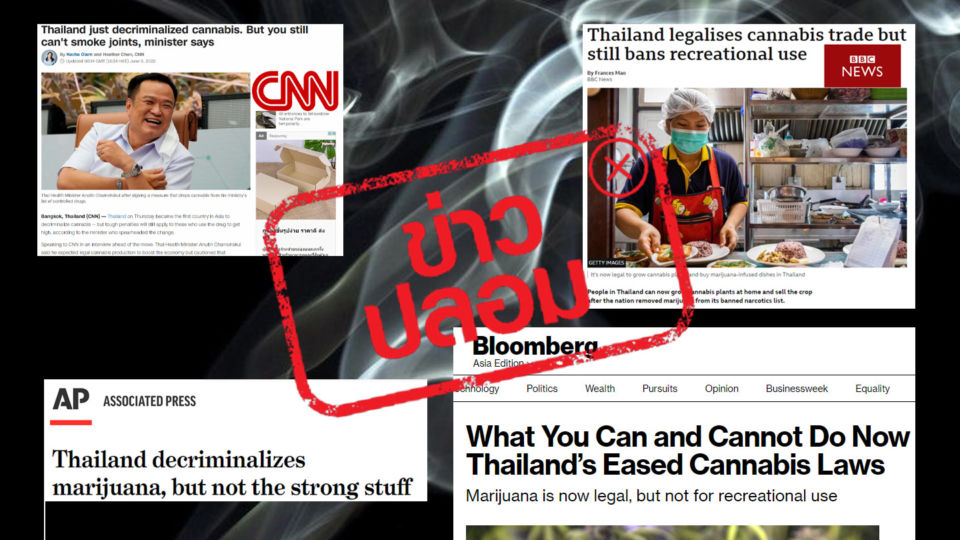
ā€œThailand on Thursday became the first country in Asia to decriminalize cannabis ā€“ but tough penalties will still apply to those who use the drug to get high,ā€ CNN reported, falsely.
There has been so much misinformation and bad reporting about cannabis legalization that false beliefs about its legal status or limited potency have become gospel for many.
No, not even Thonglor police will bust anyone for weed: chief
Disbelief that Thailand took such a radical step reverberates through headlines of the worldā€™s top news agencies, feeding the confusion rather than clarifying understanding.
ā€œThailand legalises cannabis trade ā€ the venerable BBC headlined a report that posed and answered its own question incorrectly: “So is it legal or isn’t it? As Thailand’s tourist economy recovers from its long Covid slumber, many visitors will be wondering whether the new liberal regime governing cannabis means they can light up a joint wherever and whenever they please. The answer from the government is no, you cannot smoke marijuana in public, and it is still illegal to sell or supply any products containing more than 0.2% of the main hallucinogenic compound THC.”
An imagined ā€œcapā€ on weed potency of 0.2% and ban on smoking for fun are the most persistent falsehoods.
Reached for comment Monday, Southeast Asia correspondent and English-language media daimyo Jonathan Head said he was not authorized to respond, adding that he was preparing his own report on the matter due to air next week.
After ĢĒŠÄ¹ŁĶų reached out to the BBC, a spokesperson in London sent a word-mincing statement that ā€œ[a]lthough the word ā€˜productsā€™ in this context is not wrong, we agree it could lead to confusion for audiences. So we have amended the story to use the more precise term, ā€˜extracts.ā€™ā€
In truth, there are currently no laws regulating cannabis. Instead, there is a legal vacuum since it was removed from the list of controlled substances on May 9. Not even an age limit. Thatā€™s because lawmakers were slow to act on a bill that would regulate its use. It only passed first reading Wednesday and is likely months away from enactment unless emergency measures are taken.
Until then, public nuisance laws ā€“ which can be used to enforce any unruly behavior ā€“ are the only legal tool police could potentially use to punish smokers at the moment. Even then, offenders get a warning before repeat violations draw a large fine and possible jail time.
Weed is legal Thursday but please mind the smell: Thai health officials
The most common falsehood has been near-universal reporting that there would be a limit of 0.2% THC for any weed ā€“ effectively banning it. This distortion spread through the echo chamber so thoroughly that it has become difficult to debunk. The only limit ā€“ misinterpreted by reporters and taken up by others as fact ā€“ is on secondary ā€œextractsā€ such as edibles, oils, waxes, etc.
As ĢĒŠÄ¹ŁĶų reported in January in an attempt to cut through the misinformation, reporters appeared to misunderstand what an ā€œextractā€ was.
For the truth, one only has to read the actual government orders issued.
The Public Health Ministry specified in that weed-infused food products must contain no more than 0.2% of THC by weight.
Then there was the ministerial order signed by Public Health Minister Anutin Charnvirakul back in February which alongside opium poppies and psilocybin.
That order came into effect Thursday, 120 days after it was published in the Royal Gazette, and legalized marijuana.
ā€œThe 0.2% thing, or low potency thing they’re talking about is the regulation to remove cannabis from controlled substances,ā€ Arun said. It says extracts that have THC more than 0.2% are still going to be considered narcotics. If you read through it properly, there is nothing mentioning cannabis plants at all.ā€
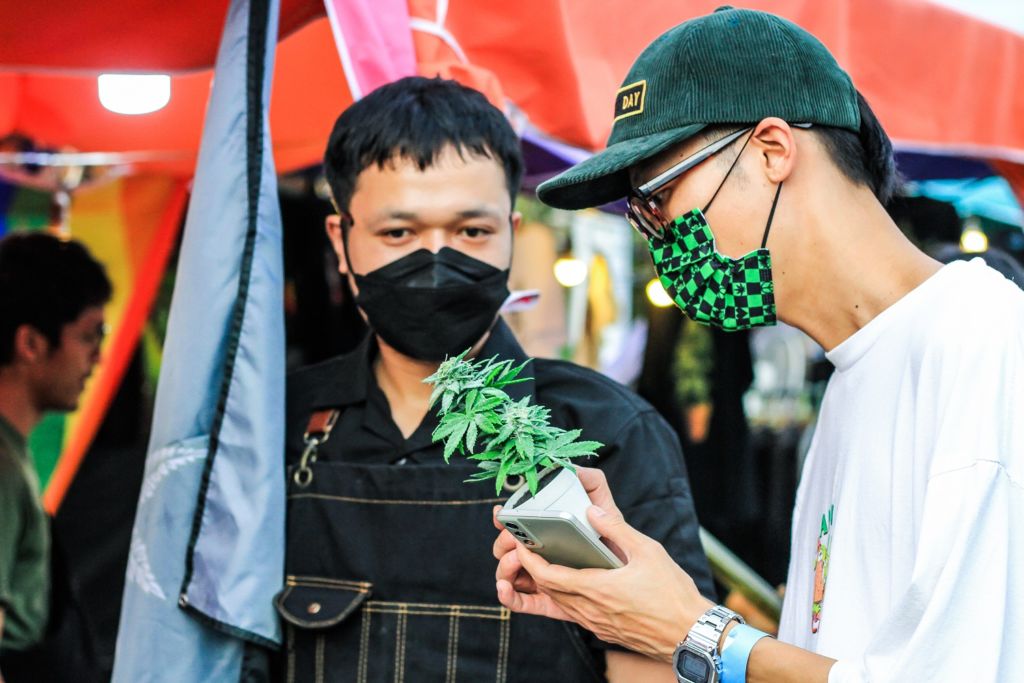
Yes, Thailand, you will be able to smoke potent weed at home
Arun said reporters havenā€™t done their due diligence.
ā€œSo when this information spread through the news, I donā€™t know if they didnā€™t pay attention to the documents, or if they just saw ā€˜0.2ā€™ and said, ‘Ahh!ā€ he added.
This didnā€™t stop top global news services from getting it wrong:
ā€œThailand decriminalizes marijuana, but not the strong stuff,ā€ the , followed by by its heavy hitters on Friday.
ā€œMarijuana is now legal, but not for recreational use,ā€ vaunted business outlet Bloomberg stated, reporting that ā€œHowever, prospects for the Thai cannabis trade will be limited by the countryā€™s ban on recreational use and the production of anything with more than 0.2% tetrahydrocannabinol (THC), the psychoactive compound that gives users a ā€˜highā€™ sensation.ā€
SMH, Bloomies. SMH.
From international wire service Reuters came this Friday report:
ā€œThailand has eased the rules on cannabis, allowing people to grow the plant at home. ,ā€ correspondent Laila Shahrokhshahi assured, saying the government would “allow the consumption of marijuana in food and drinks.”
After quoting the prime minister saying, without qualification, that ā€œpeople can consume both cannabis and hempā€ starting Thursday, the report then misstated that the authorities ā€œhave decided to limit the strength of cannabis products that are now legal, which would rule out smokers of the drugs known as pot or weed from getting high.ā€
ĢĒŠÄ¹ŁĶų reporters can verify that weed sold at several Bangkok dispensaries ā€“ from Highland Cafe and Sukhumweed to The Dispensary by Taratera ā€“ were highly potent strains such as Zkittlez, Snoop Dogg OG, Thai Loy, among others.
Reuters also misreported that cannabis growers must register via a government app. Not true, as it is not legally required.
Reached for comment Monday, Reuters newly appointed Southeast Asia Bureau Chief Kay Johnson referred questions to its communications team. In response, Reuters spokesperson Kayley Rogers said they were reviewing the matter.
After this story was published, Reuters corrected its reporting to that smoking weed was not allowed.
All this is not to say ĢĒŠÄ¹ŁĶų, which has reported since January that de facto legalization was coming this month, has not made mistakes in its reporting. Those misstatements however have erred on the conservative side, such as a previous assertion that growers would be required to register their plants, and that smoking would only be allowed at home.
As a nominally conservative country led by ultra-conservatives, Thailand has played down the radical 180-degree turn it has taken by masking it with ā€œwarningsā€ and admonitions rather than announce to the world the full extent of its liberalization. But those suggestions carry no weight of law.
Asked if he saw any journalists test the Highland products they were making claims about, Arun noted that none took their reporting that far..
ā€œI didnā€™t see any reporters smoking my stuff,ā€ he said. ā€œBut I was pretty busy.ā€
Additional reporting Chayanit Itthipongmaetee


