

Painful stereotypes about “lazy natives.” The ethnic lines of Singaporean class hierarchy. The secret histories of its black communities.Ā
As ā€œBlack Lives Matterā€ protests spread across the states, discussions about Singaporeā€™s very own racial issues have been filling social media feeds and spawning a renewed interest in racial education. But for a multiracial country; which is predominantly Chinese with minority communities of Malays, Indians, and Eurasians; it seems ironic that there is little awareness of what information is out there.Ā
Adila Shahrin, 25, set out to change that after she saw people circulating dribs and drabs of resources online, from academic research articles to opinion pieces in discussions of Singaporeā€™s own racial issues.Ā
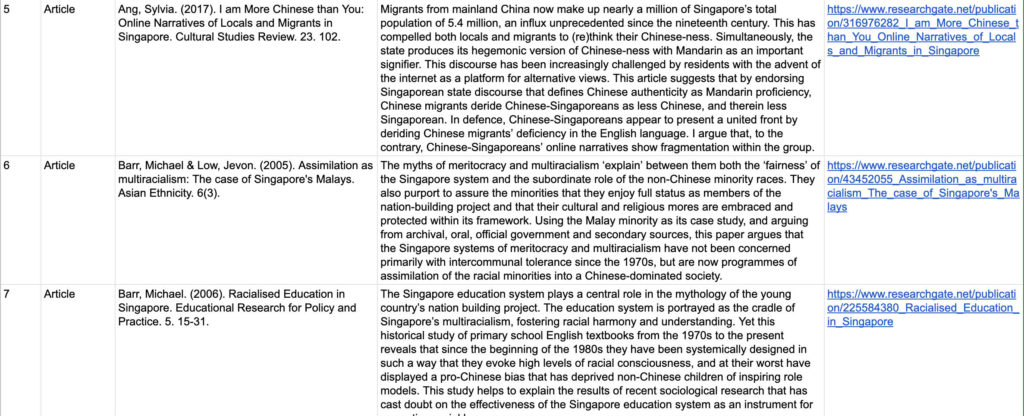
She spent the whole of Sunday crowd-sourcing and pulling together more than 50 relevant articles, books and social media accounts into a public index anyone can access to expand their knowledge on racial issues. While her resulting ā€œā€ has more than 100 entries, Adila said it is far from complete.
View this post on Instagram
ā€œThe response has been very overwhelming and heartening. I think it cuts across all racesā€¦ I think a lot of people have found it very useful in terms of them accessing it and educating themselves,ā€ the National University of Singapore graduate told ĢĒŠÄ¹ŁĶų Singapore ²ā±š²õ³Ł±š°ł»å²¹²ā.Ģż
Among the resources is The Myth of the Lazy Native, a book by Malaysian sociologist Syed Hussein Alatas touching on the long-standing stereotype of Malays, Filipinos, and Javanese. There is also Constructing Singapore: Elitism, Ethnicity and the Nation-building project, a book by authors Michael Barr and Zlatko Skrbis that takes a close look at the countryā€™s nation-building process and how ethnicities come into play.Ā
Adila also included in the list Ayer Hitam: A Black History of Singapore, in the city-state, and directs people to social media accounts such as , which creates awareness about Singaporean race issues.
ā€œThese are all interesting resources, and I want to find a way to make sure that I can go back to the resources in the future because the conversations about race arenā€™t just going to stop now and they shouldnā€™t stop now,ā€ she said.Ā Ā
She was inspired in part by American actress-activist Sarah Sophie Flicker and writer Alyssa Kleinā€™s .
ā€œI guess thatā€™s the point where I decided to start the resource bank as well, when I realized that thereā€™s a lot of resources being shared around, and there needs to be a platform where it is much easier for people to access these resources,ā€ she said.Ā
In school, most Singaporeans are taught about racial and religious traditions, study the history of race riots in the ā€˜60s, and don traditional attire during Racial Harmony Day. Adila thinks thatā€™s not enough.Ā
ā€œThereā€™s potential that conversations about race in schools might not be as in-depth. Also because the students were all very young, maybe we donā€™t have the maturity of thought to really understand,ā€ she said.
As she was compiling resources for the ā€œbank,ā€ the global studies grad said she was also thinking about her friends who did not get the chance to read research papers and studies on racial issues like she did back in university.Ā
One person who showed appreciation for Adilaā€™s initiative was writer Sudhir Thomas Vadaketh.Ā
ā€œA few days ago, I wrote on Alfian Sa’at’s Facebook wall asking him to point me to academics, writers, poets, activists, artists who have explored race and racism in Singapore and proposed the idea that we too need an anti-racism resource guide (many Singaporeans responded to this idea). Amazing to see at least a part of my wish fulfilled — it looks like a bunch of people did come together to start compiling this,ā€ he wrote Sunday.
Not enough ā€˜safeā€™ space
Adila describes herself as passionate about issues of inequality. In the past year, she has managed talks and discussions for schools and various organizations that touch on racial issues.
Events where people can have an ā€œopen conversationā€ about race were popular, the program manager said. Such spaces enabled participants to have an honest discussion and clear racial misconceptions they may have without prejudice.Ā
ā€œSimply because thereā€™s not a lot of spaces that people can go to if they want to talk about race in a safe way,ā€ she said. ā€œEven among your family and friends, thereā€™s a possibility that people are just afraid to talk about it because they donā€™t want to be judged for what they say or for saying the wrong things.ā€
She also stressed that racial discussions should be participated by people of diverse backgrounds and experiences.Ā
ā€œYou do need people who come from diverse races because you need to hear the voices of minorities. I think minorities can sometimes become complicit in terms of perpetuating casual racism. For instance, they may have internalized certain negative stereotypes about their own race and they normalize it,ā€ she said.Ā Ā
Discussions of race have taken over the internet on the back of the Black Lives Matter movement. While online platforms make for great spaces to create awareness on racism, they risk being echo chambers or sabotaged by trolls, Adila said.Ā
ā€œThe online space is not entirely a safe space for people to talk about race because you can be subject to online trolls who hide behind anonymity and try to sabotage your conversation … these are not even people who are open to a discussion and they just want to get their views out there and resort to ad hominem attacks.ā€Ā
Adila admits that putting together the resource bank is just a small move in the grander scheme of things. But she hopes that it can equip people with more knowledge to take action, speak up against racism or call out racial insensitivities.
ā€œWith more people learning about race relations in Singapore they would also learn how to become better allies,ā€ she said.Ā
Other stories to check out:Ā
Teenage suspect arrested for Instagram hate speech
Temasek Polytechnic investigates student over Instagram hate speech
Posh Peranakan restaurant sorry for swiping Indonesian dish
ā€˜Take a good hard look at our own racismā€™: Man spotlights comments on migrant workers


